How jeans are labeled
Most jeans carry a waist number in inches, and many add a length: W28 L30 means a 28-inch waist and a 30-inch inside leg. Women's jeans also come in misses sizes (2, 4, 6...), and many brands print both. The waist number is a label, not a promise. It roughly matches your body waist where the jeans sit, but brands round in their own direction, and stretch denim complicates it further.
Women's jeans sizes
| Waist label (W) | US | UK / AU | EU (FR / ES) | DE |
|---|---|---|---|---|
| 24 | 00 | 2 | 30 | 28 |
| 25 | 0 | 4 | 32 | 30 |
| 26 | 2 | 6 | 34 | 32 |
| 27 | 4 | 8 | 36 | 34 |
| 28 | 6 | 10 | 38 | 36 |
| 29 | 8 | 12 | 40 | 38 |
| 30 | 10 | 14 | 42 | 40 |
| 31 | 12 | 16 | 44 | 42 |
| 32 | 14 | 18 | 46 | 44 |
Based on: Common jeans-label mapping; brands that use "vanity" sizing can run a full size larger. Above W32 the jump between labels varies by brand, so check the brand's own chart.
| Waist label (W) | Waist in | Hips in | Waist cm | Hips cm |
|---|---|---|---|---|
| 24 | 24 | 34 | 61 | 86 |
| 25 | 25 | 35 | 64 | 89 |
| 26 | 26 | 36 | 66 | 91 |
| 27 | 27 | 37 | 69 | 94 |
| 28 | 28 | 38 | 71 | 97 |
| 29 | 29 | 39 | 74 | 99 |
| 30 | 30 | 40 | 76 | 102 |
| 31 | 31.5 | 41.5 | 80 | 105 |
| 32 | 33 | 43 | 84 | 109 |
Based on: Body waist measured where the jeans will sit: for high-rise styles that is close to your natural waist, for mid and low rise it is lower, where most people measure larger.
Above W32 there is less agreement: some brands continue one inch per size, others jump to two inches per size or switch to a plus scale. Check the brand's own chart in that range.
Men's jeans and trouser waist sizes
| Waist (W, in) | EU / DE | Letter | Waist cm |
|---|---|---|---|
| 28 | 44 | S | 71 |
| 29 | 44 / 46 | S | 74 |
| 30 | 46 | S | 76 |
| 31 | 46 / 48 | M | 79 |
| 32 | 48 | M | 81 |
| 33 | 48 / 50 | M | 84 |
| 34 | 50 | L | 86 |
| 35 | 50 / 52 | L | 89 |
| 36 | 52 | L | 91 |
| 37 | 52 / 54 | XL | 94 |
| 38 | 54 | XL | 97 |
| 39 | 54 / 56 | XL | 99 |
| 40 | 56 | XXL | 102 |
| 41 | 56 / 58 | XXL | 104 |
| 42 | 58 | XXL | 107 |
Based on: German and many European trouser sizes run about 16 above the inch waist (W32 = 48). Odd inch sizes fall between two European numbers. Jeans labels are often an inch or two more generous than the real waistband, so measure a pair that fits.
The "Waist cm" column is a straight conversion of the label. In practice many men's jeans measure an inch or two larger at the waistband than the label says, so the reliable check is to lay a pair that fits flat, measure across the waistband and double it.
Length (L) and inseam
The L number is the inside leg, from crotch seam to hem, in inches. Common stock lengths are 30, 32 and 34, with 28 and 36 at many brands. The fastest way to know yours is to measure the inseam of a pair you like the length of. Keep in mind how you'll wear them: cropped and ankle styles are meant to end above the ankle, and wide-leg styles usually look best long enough to graze the floor in the shoes you'll wear.
Rise changes your waist number
Rise is the distance from the crotch seam to the top of the waistband. High-rise jeans sit at or near your natural waist; mid-rise sits a couple of inches lower; low-rise sits near the hips. Because most bodies widen below the natural waist, the same person can need a larger waist label in mid- or low-rise jeans than in high-rise. Measure where the waistband will actually sit.
Stretch versus rigid denim
Jeans with elastane or other stretch fibers tend to relax with wear, often by about half a size, so the snug pair in the changing room is usually the right one. Rigid, 100% cotton denim barely gives at the waist (it molds to you instead), so choose the size that buttons without strain, and expect the first wash to shrink it slightly unless it is labeled pre-shrunk or sanforized.
Fit names: skinny, slim, straight, relaxed, wide
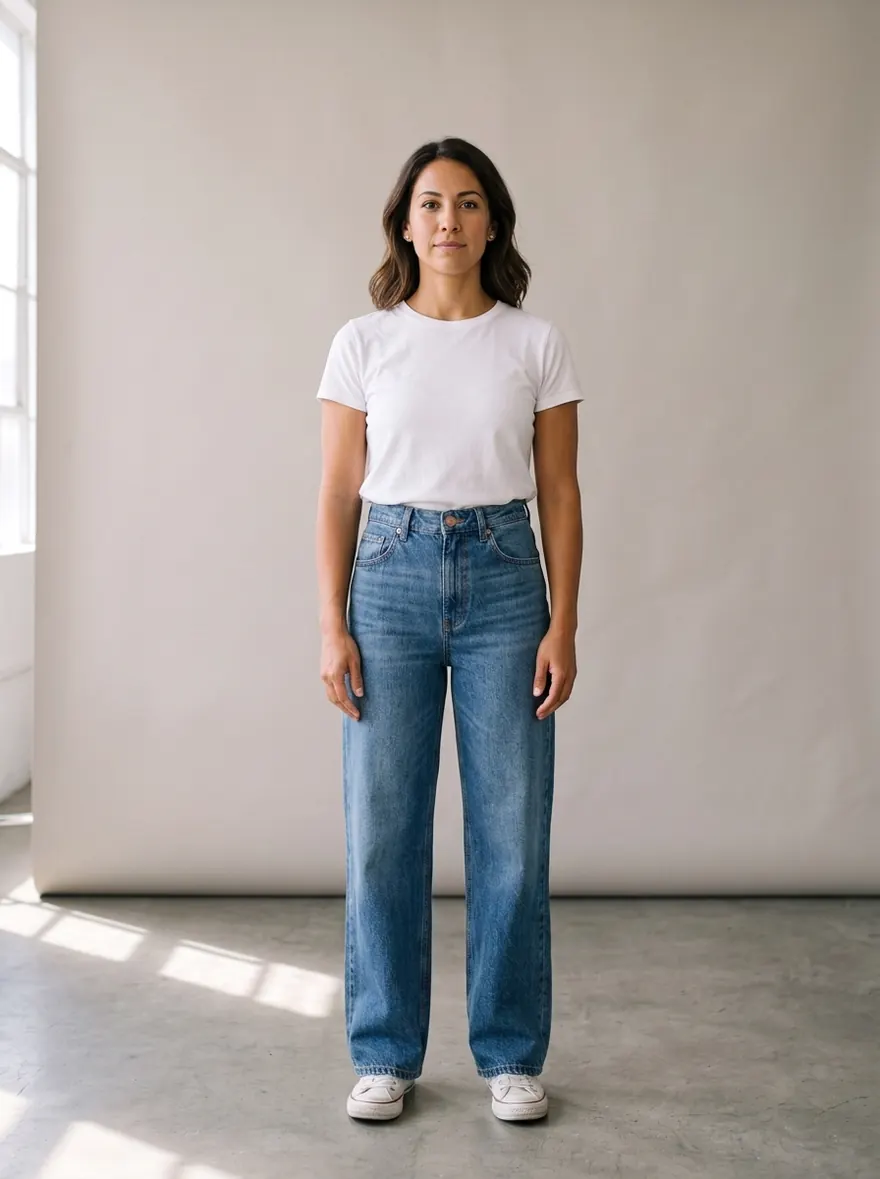
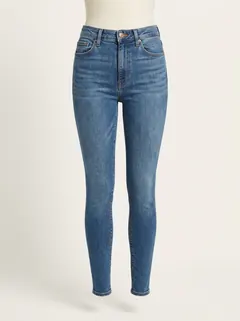
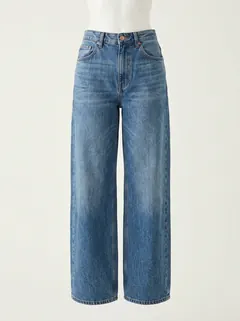
Fit names describe the leg and seat, not the waist size. A W28 skinny and a W28 wide-leg from the same brand should fit your waist the same, but they create very different proportions, as the try-on example on this page shows. If you have fuller thighs or seat, a relaxed or straight fit in your usual waist is often more comfortable than sizing up in a skinny fit, which would gape at the waist.